Pretty Wild
Cream Wild Indigo (Baptisia bracteata)
Cream Wild Indigo (Baptisia bracteata)
Couldn't load pickup availability
Share
Cream Wild Indigo (Baptisia bracteata)
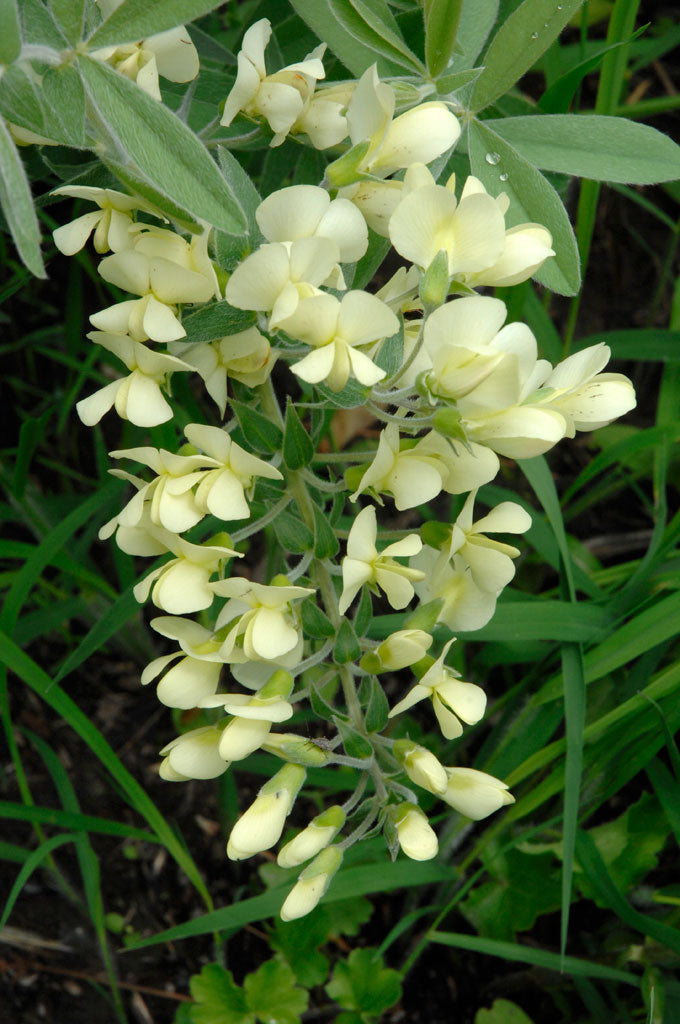
Cream Wild Indigo is less commonly planted than Wisconsin's other native baptisia/indigo species, but no less beautiful. A great importance to queen bumblebees as it's among one of the first prairie species to bloom in late spring, arching stems are lined with drooping clusters of creamy yellow flowers that dangle beneath the foliage. Its blue-green, clover-like leaves remain attractive throughout the entire growing season, while the inflated seed pods that follow add texture well into fall. Its dense, shrub-like appearance has wonderful grounding presence in a garden bed.
Cream Wild Indigo is remarkably tough. Its deep taproot allows it to thrive in dry, windy or rocky garden beds with little supplemental water once established. Like other members of the pea family, it also fixes nitrogen in the soil, enriching the surrounding garden while requiring very little maintenance. Because of its deep roots, it resents transplanting but rewards patience with decades of dependable growth.
Growing Conditions
Light: Full sun to part shade
Soil: Dry to medium; prefers well-drained sandy, rocky, or loamy soils
Height: 2 feet
Spread: 2–3 feet
Zones: 4–8
Bloom time: May through June
Wildlife Value
Cream Wild Indigo is an important native legume that supports a variety of pollinators, especially long-tongued native bees and bumble bees that are strong enough to open its pea-like flowers. It also serves as a host plant for several butterflies and moths, including the Wild Indigo Duskywing (Erynnis baptisiae), whose caterpillars feed on Baptisia species. Like other native legumes, it contributes to healthy prairie ecosystems by enriching the soil with nitrogen.
Blooms Alongside: prairie smoke (Geum triflorum), Ohio spiderwort (Tradescantia ohiensis), Lanceleaf Coreopsis (Coreopsis lanceolata), Amethyst Shooting Star (dodecatheon amethystinum), Wild geranium (geranium maculatum)