Pretty Wild
Aromatic Aster (Symphyotrichum oblongifolium)
Aromatic Aster (Symphyotrichum oblongifolium)
Couldn't load pickup availability
Share
Aromatic Aster (Symphyotrichum oblongifolium)
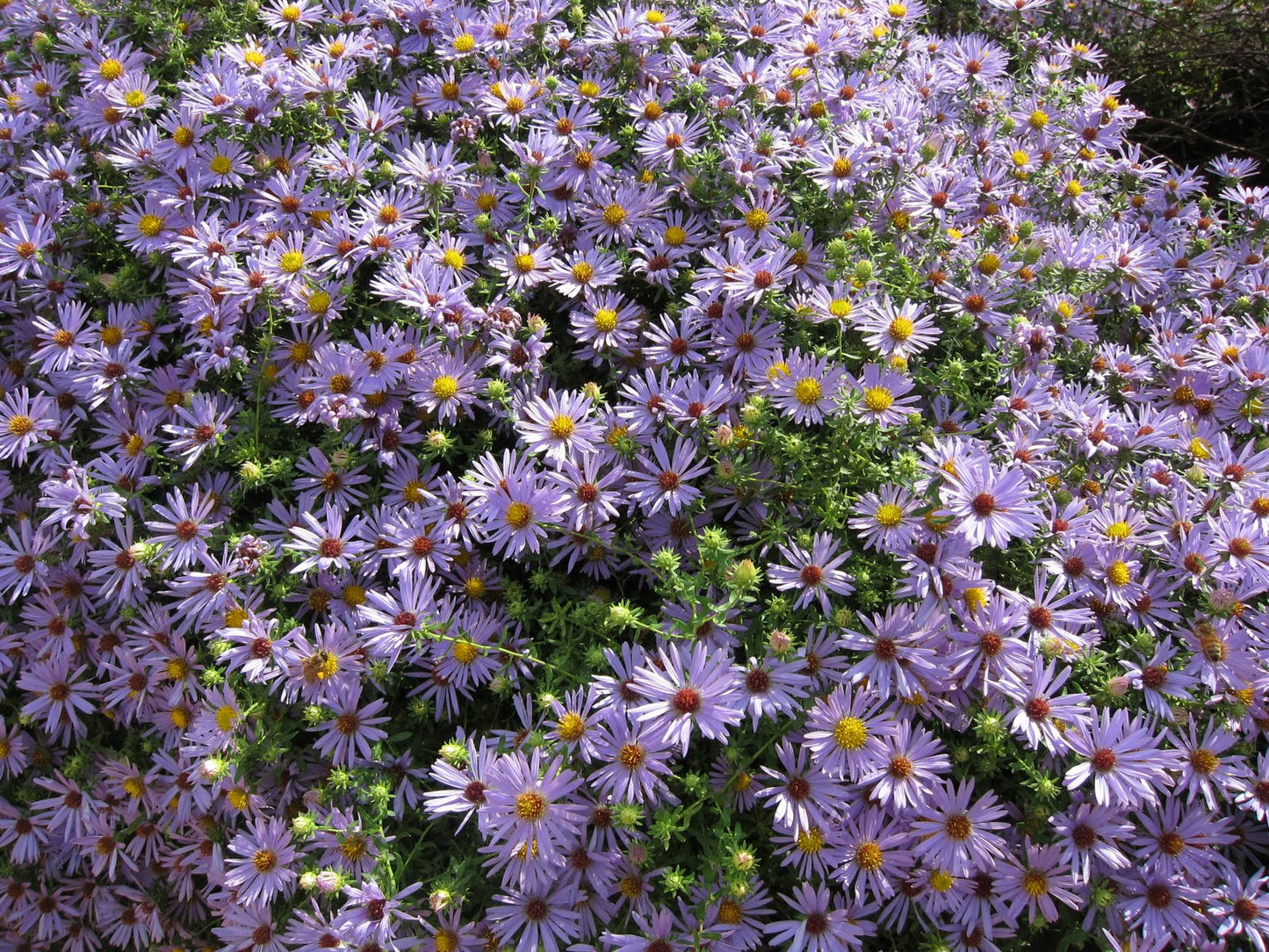
Aromatic aster carries the late season. It's one of the last aster species to flower, blooming well into October (and often November too!). Low, spreading, and absolutely covered in violet-blue flowers in fall, it brings a burst of color to the garden right when many plants are winding down. When brushed or warmed by the sun, the foliage releases a soft, herbal scent.
This is a true keystone plant, supporting an enormous number of native insects, especially late-season pollinators that rely on fall blooms to survive. In southeastern Wisconsin, aromatic aster becomes a critical nectar source for native bees, butterflies, and migrating species preparing for winter or long journeys south.
Unlike taller asters, this one stays compact and spreads outward rather than upward, weaving between neighboring plants and stabilizing soil. Cut back in early May to create a compact , mounding form that can be used like a traditional hedge. It spreads less aggressively than other aster species, and can be contained by surrounding with grasses.
Growing Conditions
Light: Full sun
Soil: Dry to medium, well-drained
Moisture: Low once established
Height: 1–2 feet
Spread: 2–3 feet, spreading gently by rhizomes
Zones: 3–8
Bloom time: September through October/November
Wildlife Value
Aromatic aster is a keystone species, meaning it supports far more wildlife than most plants. Its flowers provide critical late-season nectar, and its foliage hosts specialist moths and butterflies. Leaving stems standing through winter adds shelter for insects and contributes to overwintering habitat.
Blooms Alongside
Stiff goldenrod (Oligoneruon rigidum), Showy goldenrod (Solidago speciosa), Little bluestem (Schizachyrium scoparium)
For more information, please check out our sizes, pricing and ordering page.