Pretty Wild
American Elderberry (Sambucus canadensis)
American Elderberry (Sambucus canadensis)
Couldn't load pickup availability
Share
American Elderberry (Sambucus canadensis)
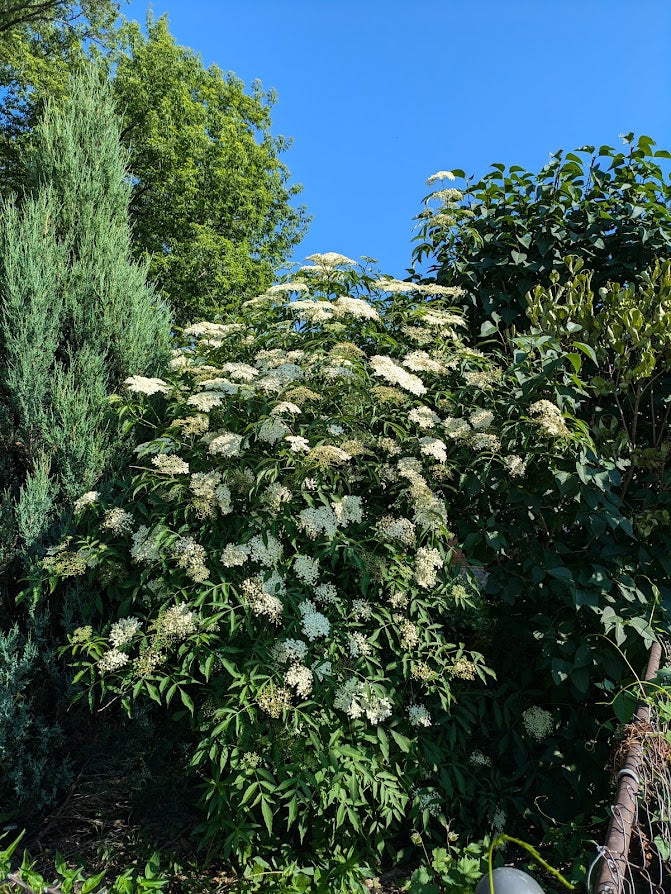
American Elderberry is a fast-growing native shrub known for its intoxicatingl smelling clusters of creamy white flowers in early summer and deep purple-black berries in late summer. It thrives in a variety of landscapes, from wild hedgerows/privacy screens and streambanks to home gardens and edible landscapes. Elderberry’s airy, arching form and compound leaves give it a lush, natural look, while its flowers and fruit provide exceptional ecological, medicinal and culinary value. Though it spreads by suckers, it can be managed easily and shaped into hedges or small multi-stemmed trees. We use ours as a privacy screen and harvest the berries from it every other year, leaving a year in between for the birds to enjoy, as our single plant produces enough berries in a single season to make tincture from to cover the off year and share with friends.
Growing Conditions
Light: Full sun to part shade
Soil: Medium to rich, well-drained to moist soils (tolerates clay)
Moisture: Prefers moist soils; tolerates seasonal flooding
Height: 6–12 feet
Spread: 3–5 feet
Zones: 3–9
Bloom time: June, July
Wildlife Value:
American Elderberry is a powerhouse for wildlife. Its flowers are an amazing nectar source for native bees, hoverflies, and butterflies, and the berries are a critical food source for over 33 species of birds, including Eastern Bluebird, American Robin, Northern Cardinal, Cedar Waxwing, and Red-bellied and Red-headed Woodpeckers . Mammals like deer and raccoons also browse the fruit. The largest moth in North America, the Cecropia Moth (Hyalophora cecropia), as well as the Polyphemus Moth (Antheraea polyphemus) feed on elderberry's foliage.
Plant alongside other moisture-loving natives like Joe Pye Weed (Eutrochium maculatum) and Swamp Milkweed (Asclepias incarnata) for a lush, wildlife-rich planting.